
Economics
Economics: Understanding the Global Economy
Production, consumption, and micro- and macroeconomic theories are all covered in our exhaustive guide. Develop knowledge of public, international, and development economics. Keep up with the most recent innovations in the area. Become familiar with the fundamental theories and concepts that drive the functioning of the world economy.
What is economics?
Economics, which some people mistakenly think is boring, is actually very interesting. It delves into decision-making in a world where resources such as money and time are limited, yet our aspirations remain boundless. This discipline ranges everything from individual spending habits to corporate strategies and national policies. Every choice influences aspects ranging from market prices to our daily living. Essentially, economics is about managing these choices in a landscape where our resources and desires are not always in harmony. Let’s explore this intriguing subject further.
Read More
Microeconomics: The Behavior of Individuals and Firms. Macroeconomics: The Big Picture. Economic Systems and Structures. Government Policies and Economic Management. Economics, therefore, is about much more than money and markets. It’s a lens through which we can understand human behavior, societal structures, and global interactions in a world of limited resources. It helps us appreciate the complex interplay between individual choices and collective outcomes, making it a crucial discipline in shaping both policy and everyday life.
Foundations of Economics: Scarcity and Choice.
– Scarcity and Choice: At its core, economics revolves around the concept of scarcity — the fundamental fact that our wants exceed the limited resources available to satisfy them. This leads to the need for choice, where individuals and societies must decide how best to allocate these resources.
– Opportunity Costs: Every choice has an opportunity cost, representing the next best alternative that is foregone. Understanding this concept helps in making informed decisions, where the benefits and costs of each option are weighed.
– Rational Behavior and Incentives: Economics assumes that individuals and entities act rationally, seeking to maximize their benefits or utility. Incentives, both positive and negative, play a crucial role in guiding these decisions.
– Market Equilibrium: This concept explains how, in a free market, the price and quantity of goods or services are determined by the intersection of demand (from consumers) and supply (from producers).
– Elasticity: Understanding how sensitive the demand for a good is to changes in price or other factors (like income or the price of related goods) is crucial in predicting market responses.
– Consumer and Producer Surplus: These concepts reflect the benefits that consumers and producers gain from market transactions, beyond what they would have been willing to accept or pay.
– National Income and Economic Growth: These indicators measure the overall economic health of a country and its growth trajectory.
– Inflation and Unemployment: These are key concerns for macroeconomists, influencing a wide range of policy decisions due to their impact on the overall economy.
– Business Cycles: Understanding the patterns of expansion and contraction in an economy helps in devising policies aimed at stabilizing these fluctuations.
– Capitalist Systems: Here, markets and private ownership drive economic decisions, with limited government intervention.
– Socialist and Communist Systems: In these systems, the state often plays a significant role in controlling and distributing resources.
– Mixed Economies: Most modern economies are mixed, blending elements of market-driven capitalism with varying degrees of government intervention.
– Monetary and Fiscal Policies: These are the primary tools through which governments influence their economies, managing money supply and government spending.
– Regulation and Deregulation: Balancing the need for regulation to protect consumers and the environment against the benefits of a free market is a key policy challenge.
– Trade Policies: Decisions regarding tariffs, trade agreements, and other aspects of international trade significantly impact a nation’s economy.
Why do we study economics?
The study of economics is vital for several reasons, playing a key role in shaping our understanding of how societies allocate their limited resources. It’s a discipline that goes beyond just financial transactions, exploring the core of decision-making processes at individual, organizational, and governmental levels.
- Understanding Resource Allocation. Economics provides a framework for understanding how societies allocate scarce resources. It examines how these resources can be distributed effectively to meet the needs and wants of a population, considering the limitations of those resources.
- Decision-Making Insights. The study of economics is central to understanding decision-making processes. It sheds light on how individuals, businesses, and governments make choices, and the implications of these choices for resource allocation and welfare.
- Historical and Evolutionary Perspective. Economics helps us comprehend how economic systems have evolved over time, from barter systems to modern-day digital currencies. This historical context is vital for understanding current economic structures and anticipating future trends.
- Predictive and Analytical Power. Economics equips us with tools to predict market trends, consumer behavior, and the potential impacts of policy decisions. This predictive capability is crucial for businesses, governments, and individuals to plan and make informed decisions.
- Improving Quality of Life. At its core, the aim of economic study is to enhance societal well-being. It guides policies and practices that aim to improve the standard of living, reduce poverty, and ensure sustainable development.
- Promoting Sustainable Stability. Economics is essential in promoting long-term stability in the economy. By understanding economic cycles, policymakers can implement strategies to mitigate the effects of economic downturns and maintain sustainable growth.
- Enabling Inclusive Growth. A key aspect of modern economics is ensuring that economic progress is inclusive, benefiting all segments of society. This focus on inclusive growth helps reduce inequality and foster a more equitable society.
- Operational Efficiency. Economics teaches us how to achieve the greatest output with limited resources, promoting efficiency in various sectors of the economy. This principle of efficiency is crucial in both the public and private sectors.
- Formulating Effective Policies. Understanding economics is fundamental for governments to formulate effective policies. It provides a basis for interventions in areas such as taxation, welfare, public services, and environmental regulation.
- Strategic Management of Scarcity. Economics helps individuals and businesses understand and manage scarcity strategically. It empowers them to make choices that maximize their objectives, whether it’s profit, welfare, or societal impact.
Where do we use economics?
Economics is essential in numerous areas of our daily lives and society. By applying its principles and theories, we gain insights into how to enhance various activities and policies. It helps us understand the allocation of resources and the dynamics of supply and demand. Moreover, economics provides tools for addressing societal challenges and improving overall well-being. Here are a few examples:
Personal Finance Management.
– Making Informed Decisions: Economics equips individuals with the knowledge to make wise decisions about saving, investing, and spending. Understanding economic indicators like inflation, interest rates, and market trends can help people manage their finances more effectively.
– Risk Assessment: Concepts like risk diversification, opportunity cost, and future value are directly derived from economics, aiding in personal financial planning and investment strategies.
Business Strategy and Operations.
– Production and Pricing Strategies: Businesses use economic theories to optimize production processes and set prices. Understanding supply and demand dynamics, market competition, and consumer preferences is crucial for profitability and growth.
– Resource Allocation: Economics provides insights into efficient resource allocation within a company, ensuring that each sector of the business is optimally funded and managed.
– Market Analysis: Analyzing market trends and economic conditions helps businesses in strategic planning and forecasting future demand.
Government and Public Policy.
– Fiscal and Monetary Policies: Governments rely on economic analysis to formulate fiscal policies (like taxation and government spending) and monetary policies (like control of money supply and interest rates).
– Public Services and Welfare Programs: Economic principles guide the government in the efficient allocation of resources for public services, welfare programs, and infrastructure development.
– Regulatory Frameworks: Economics aids in designing regulatory policies that balance the needs of the market, consumers, and the environment.
International Trade and Global Economics.
– Trade Policies: Economics is fundamental in shaping international trade policies, tariffs, and trade agreements, impacting how countries interact in the global market.
– Global Economic Dynamics: Understanding global economic trends and foreign exchange markets is essential for countries to position themselves advantageously on the international stage.
Environmental Economics and Sustainability.
– Cost-Benefit Analysis of Environmental Policies: Economists evaluate the environmental impact of industrial activities and propose measures to mitigate negative effects while considering economic feasibility.
– Sustainable Resource Management: Economics offers models for sustainable resource management, ensuring that environmental resources are used efficiently and conserved for future generations.
Education and Research.
– Academic Pursuits: Economics is a major field of study in academia, contributing to our understanding of various economic phenomena through research and analysis.
– Policy Research and Development: Think tanks, research institutions, and academic scholars use economic principles to study and propose solutions to economic challenges.
Healthcare Economics.
– Healthcare Policy and Management: Economics helps in analyzing healthcare systems, the effectiveness of different health policies, and the allocation of resources in healthcare services.
Technology and Innovation.
– Evaluating Technological Impacts: Economics assesses the impact of technological advancements on markets, employment, and productivity.
Which types of economics can be identified?
The study of economics covers a broad spectrum of sub-disciplines, each providing insights into different facets of economic activities and decision-making processes. Below are some of the key branches of economics, essential for grasping the complexities of markets and economic policies.
- Microeconomics: Focuses on the actions of individual agents within the economy, such as households, firms, and buyers and sellers in the market. It examines how these agents make decisions and how they interact in specific markets, considering concepts like supply and demand, market equilibrium, consumer behavior, and production costs.
- Macroeconomics:Deals with the economy as a whole, looking at aggregate phenomena such as GDP, unemployment rates, national income, price indices, and the interrelation between different sectors of the economy. It explores broader economic factors and policies, including inflation, economic growth, and the role of government and central banks in regulating the economy.
- International economics:Studies economic transactions and policies across countries, including trade, international finance, and globalization. This field examines how countries engage through trade and finance, the impact of exchange rates, trade barriers, and the effects of international economic policies.
- Development economics:Concerned with economic growth and development in low-income countries. It explores the causes of poverty, strategies for economic development, income distribution, and the policies and interventions that can improve economic outcomes in developing regions.
- Environmental economics:Focuses on the relationship between the economy and the environment. This field studies how economic activity affects the environment and how environmental policies can be designed. It includes analysis of resource allocation, environmental regulation, the economic impact of environmental policies, and sustainable development.
- Behavioral economics:Merges economics with psychology to understand how psychological factors influence economic decision-making. It challenges the traditional economic assumption of rational behavior, instead examining how factors like cognitive biases, emotions, and social influences affect economic decisions.
- Labor Economics: Examines the dynamics of the labor markets and the decisions of employers and employees. It includes topics like wage determination, employment and unemployment, labor market policies, and the role of unions.
- Health Economics: Studies the healthcare system and health-affecting behaviors. It looks at how healthcare services are funded and delivered and how healthcare policies can impact health outcomes.
- Financial Economics: Deals with the allocation and management of resources and risks in financial markets. It includes the study of financial instruments, investment strategies, the functioning of financial markets, and the role of financial institutions.
- Public Economics: Examines the role of government in the economy, including taxation, government spending, and the design of public policies. It analyzes how government decisions impact the allocation of resources and distribution of income in the society.
Each of these branches addresses specific questions and uses various methodologies to understand complex economic phenomena. The diverse nature of economics allows for a broad analysis of both individual and collective economic behavior, offering insights crucial for decision-makers across sectors.
Books
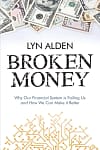
Broken Money: Why Our Financial System Is Failing Us and How We Can Make It Better
Lyn Alden exposes the cracks in the global financial infrastructure, offering an insightful critique alongside practical solutions for a more robust, equitable future.
A must-read for anyone seeking to understand and improve our economic landscape.

Principles for Dealing with the Changing World Order: Why Nations Succeed and Fail
Ray Dalio navigates the historical patterns of national success and failure, providing a unique lens through which to view our current global volatility. His principles offer a roadmap for understanding and adapting to the ever-changing world order.
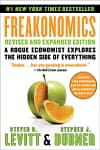
Freakonomics
Want to understand how the economy impacts your daily life?
Levitt and Dubner’s Freakonomics uses surprising real-world examples to make economics fun and engaging.
Uncover the hidden forces shaping your world and gain a fresh perspective on everyday experiences with this thought-provoking book.
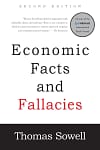
Economic Facts and Fallacies
Thomas Sowell challenges common misconceptions in economics with clear, empirical evidence. This revised edition debunks myths, fostering a deeper understanding of complex economic issues.
An essential guide for anyone looking to navigate the truth behind economic debates.
How can we use economics?
Understanding how economics impacts our world is crucial for informed decision-making. With its comprehensive analysis of markets, behaviors, and trends, economics provides invaluable insights for various domains. Here are some effective ways to apply economics:
Business Strategy and Market Analysis.
– Understanding Market Dynamics: By studying market trends and customer behaviors, businesses can make informed decisions about production, pricing, and marketing strategies.
– Competitive Analysis: Economics helps businesses understand their position in the market relative to competitors, guiding strategies to gain a competitive edge.
– Risk Management: Economic theories aid in identifying and mitigating business risks, such as market volatility or changes in consumer preferences.
Policy Analysis and Government Planning.
– Evaluating Policy Impacts: Governments can use economic analysis to assess the potential impacts of policies on the economy, sectors, and individuals. This includes understanding the effects of taxation, subsidies, minimum wages, and other regulations.
– Budgeting and Fiscal Management: Economics is crucial for government budgeting, helping to allocate resources efficiently and prioritize spending based on economic goals and needs.
Resource Allocation and Management.
– Optimizing Resource Use: Economics provides frameworks for evaluating the costs and benefits of various options, aiding in making educated decisions about resource allocation in both the public and private sectors.
– Environmental Economics: Understanding the economic impact of environmental policies and resource management helps balance economic growth with sustainability.
Investment and Financial Markets.
– Financial Decision-Making: A strong grasp of economics can improve investment decisions by providing a better understanding of financial markets, interest rates, inflation, and economic indicators.
– Portfolio Management: Economics aids investors in diversifying their portfolios and understanding the broader economic factors that impact investment returns.
Global Trade and International Relations.
– Navigating International Trade: Economics helps individuals, corporations, and governments understand how nations interact through trade and investment, informing decisions on export-import strategies, foreign investments, and market expansion.
– Assessing Global Trends: Understanding global economic trends is essential for multinational businesses and policymakers to strategize in a globally interconnected market.
Personal Finance Management.
– Budgeting and Savings: Economics educates individuals on managing personal finances, understanding savings and investment strategies, and planning for future economic conditions.
– Consumer Decision-Making: It provides insights into consumer rights, the impact of economic cycles on personal finance, and strategies for navigating economic uncertainties.
Educational and Research Applications.
– Academic Research: Economics is used extensively in academic research to study various phenomena, from labor market dynamics to technological innovation.
– Curriculum Development: In education, economics principles are integral in developing curricula that prepare students for a complex economic world.
Healthcare and Public Health.
– Health Economics: It’s used in analyzing healthcare policies, the efficiency of healthcare delivery, and in making decisions regarding public health initiatives.
What tools can be used to understand the economics?
Gaining insights into economic systems and behaviors requires the use of various tools and interdisciplinary approaches. Among the primary tools and fields of study associated with economics are: Computational models enable the simulation of complex economic processes. In addition, public economics focuses on the role of government in the economy, including taxation and public spending.
Mathematics in Economics.
– Modeling and Theoretical Frameworks: Economists use mathematical models to represent complex economic processes and relationships. These models help in analyzing scenarios, understanding trends, and making predictions.
– Calculus and Optimization: Used for analyzing changes and trends, and for finding optimal solutions in various economic contexts like maximizing profits or utility, and minimizing costs.
Statistical Analysis.
– Data Analysis: Statistics is crucial for analyzing economic data, which can range from household income to national GDP. Statistical tools help in identifying patterns, correlations, and causations in economic data.
– Econometrics: This field combines economic theory with statistical methods to test hypotheses and estimate future trends.
Finance and Economics.
– Financial Markets Analysis: Understanding the functioning of financial markets, including stock markets, bond markets, and derivatives markets, is essential for economic analysis.
– Investment and Risk Management: Economic principles are applied in assessing investment risks and returns, portfolio management, and in understanding market dynamics.
Political Economy.
– Government Policy Analysis: Understanding the impact of government policies, regulations, and political processes on economic outcomes is a key aspect of political economy.
– International Relations: This includes the study of economic policies within the broader context of international relations and global politics.
Behavioral Economics.
– Psychological Insights: Incorporating psychology into economic analysis helps understand how cognitive biases, emotions, and social factors influence decision-making.
– Experimental Economics: Using experiments to study economic behavior under controlled settings, providing insights into how people make decisions in real-world scenarios.
Computational Economics.
– Computer Simulations: Simulating economic models using computational methods to analyze complex systems that are difficult to study analytically.
– Big Data Analysis: Utilizing big data tools to analyze vast and complex datasets for economic research and forecasting.
Historical and Sociological Approaches.
– Economic History: Studying historical economic data and trends to understand current economic phenomena.
– Sociological Analysis: Examining the social context and implications of economic behaviors and policies.
Environmental Economics Tools.
– Cost-Benefit Analysis: Evaluating the environmental impacts of economic activities and policies.
– Resource Management Models: Analyzing and optimizing the use of natural resources for sustainable development.
Legal Frameworks in Economics.
– Law and Economics: Studying the interplay between legal frameworks and economic behavior, such as how property rights and contracts influence market outcomes.
Read more
-
World Bank
Extensive information on global economic development, data, and research reports.
-
International Monetary Fund (IMF)
Economic data, research, and reports on global economic trends and policies.
-
National Bureau of Economic Research (NBER)
Private, non-profit organization conducting economic research and publishing working papers and studies.
-
The Economist
International news and business publication covering various economic topics.
-
The Financial Times
Reputable international newspaper covering global economic news and analysis.
What is the impact of technology on economics?
The intersection of technology and economics is a dynamic and transformative force in our world. It’s remarkable to consider how advancements in technology have consistently reshaped economies throughout history, triggering waves of progress, innovation, and sometimes disruption.
We dive into the fascinating world of digital currencies, automation, and artificial intelligence (AI), all of which are not just buzzwords but pivotal elements in the evolving narrative of economic development. As we stand on the brink of what many call the Fourth Industrial Revolution, it is crucial, especially for future economists, to understand the profound implications these technologies hold for the future of economics.
Technology-Driven Economic Changes.
– History is replete with instances where technology has significantly altered economic landscapes. The Industrial Revolution, for example, transitioned societies from agrarian economies to industrial powerhouses, changing everything from production methods to labor markets.
– In recent times, the digital revolution has transformed how we trade, communicate, and manage businesses. E-commerce platforms have redefined retail, while fintech solutions have revolutionized banking and finance.
Evolving Investment Trends.
– The landscape of investment has seen remarkable transformations. Gone are the days of stock traders shouting orders on exchange floors. Now, online platforms and algorithm-based trading dominate, offering speed and efficiency.
– The rise of sustainable and responsible investing reflects a growing awareness of environmental and social issues. Investors are increasingly considering the long-term impacts of their investments, leading to a surge in demand for ‘green’ stocks and ethical funds.
– The popularity of cryptocurrency investments is a testament to the changing perceptions of value and the embrace of digital assets.
Digital Platforms and Financial Markets.
– Digital platforms have democratized access to financial markets, allowing anyone with an internet connection to invest. This shift has led to a more diverse investor base, with varying levels of experience and objectives.
– Robo-advisors, powered by AI algorithms, are providing personalized investment advice, making wealth management services accessible to a broader audience.
– Mobile trading apps have changed the way people interact with financial markets, enabling real-time trading and access to global markets from the palm of one’s hand.
The Role of AI and Automation.
– AI and automation are poised to radically change industries, from manufacturing to services. While automation could lead to the displacement of certain job roles, it also opens avenues for new types of employment and productivity enhancements.
– Predictive analytics, a facet of AI, is transforming decision-making processes in businesses, offering insights that were previously unattainable. AI’s capability in handling vast amounts of data is reshaping sectors like finance, healthcare, and logistics.
– The integration of AI in economic forecasting models promises more accuracy in predicting market trends and consumer behavior, enabling more informed policy and business decisions.
Digital Currencies: A New Economic Frontier.
– Digital currencies, such as Bitcoin and Ethereum, are not just new forms of money but represent a fundamental shift in the concept of financial transactions. They challenge traditional banking systems and introduce a decentralized model of financial exchange.
– The blockchain technology underlying these currencies ensures transparency and security, characteristics that could redefine trust in financial systems.
– The potential impact of digital currencies extends beyond just transactions; they could influence monetary policies, financial regulations, and even global economic stability.
These new technologies, it’s important not to view them as definitive answers to economic challenges but as tools that carry both opportunities and responsibilities. The future of economics, mix with technological advancements, is not a pre-written script but an unfolding story that demands continuous learning and adaptation. We did not conclude the story, but we invite you to ponder and participate in the ongoing dialogue about the crossroad of technology and economics. In this journey, understanding technology is not just about grasping its mechanics but appreciating its potential to reshape the economic landscapes of tomorrow.